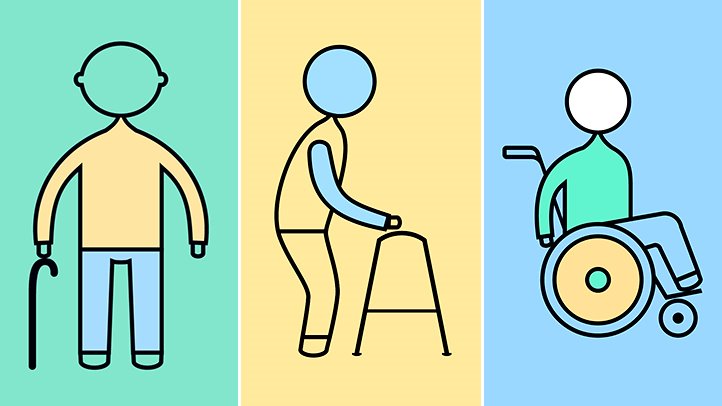
“The symptoms of Parkinson may become more severe over a 20-year or longer period. The level of intensification of the symptoms varies from person to person. The primary symptoms of Parkinson’s disease — tremors, stiff muscles, slow movement (bradykinesia), and balance of difficulty — may at first be mild but gradually become more intense and weakening.”
Most physicians use a rating scale called Parkinson’s Disease’s Hoehn and Yahr Staging to figure out how far the disease has progressed. The disease of Parkinson is progressive: it gets worse over time.
Stage one: Mild symptoms only affect one side of the body.
Stage two: Symptoms affect all sides of the body, including shifts in posture and gait.
Stage three: The motion of the body is slow and the balance is impaired
Stage four: Symptoms are serious and impaired, muscles are rigid, the person is not able to live alone and walking becomes limited.
Stage five: The patient needs constant care in wheelchair-bound and bedridden.
Although your doctor may be able to tell you how far you or a loved one are on this scale, it is unknown how quickly you will hit the next level. You should assume that your physical activity will also begin to decline when you feel your symptoms worsen.
Learn more: Brand medications to treat Parkinson’s Disease
Parkinson’s Dementia Signs
For Parkinson’s disease, up to one-third of people develop dementia. Dementia issues may include memory problems, attention span, and what is called the executive function — the decision-making process, coordination, time management, and prioritization process.
How does treatment benefit?
Medical treatment to help restore the necessary dopamine neurotransmitter or home remedies such as exercise can help ease the symptoms. Tracking your medication progress helps determine if your condition is advanced. The treatment stages for Parkinson typically proceed in the following order:
No medicine needed: Signs of Parkinson’s disease may be very mild in its early stages and may not require treatment.
Good drug response: As symptoms begin to affect the working, the Parkinson’s medication Sinemet (a combination of carbidopa and levodopa) can help. In many patients, it can reduce symptoms significantly and effectively for 5 to 10 years, and in about 25 percent of patients longer. But it comes with side effects such as tics and repetitive (called dyskinesias) movements.
Waning medication response: You will need to increase the amount you are taking or add another to boost the carbidopa-levodopa combo when the efficacy of the medication begins to wear off. Examples include MAO-inhibitors such as selegiline and rasagiline, and entacapone and tolcapone COMT-inhibitors; these are long-lasting aids.
Learn more: Other medications that help in Parkinson’s disease
Unpredictable medication response: Instead of appearing at consistent intervals, signs of breakthrough may begin to appear at random and may be induced by stress and anxiety. Medicines are going to be constantly tracked at this level.
Dyskinesias: These involuntary movements happen after the peak performance of your medication dose. Adjusting your medication dose — and perhaps surgery — may help.
Severely unpredictable symptoms: In the most advanced stages, extreme symptom flare-ups coincide with serious dyskinesias, following changes to the drug. An operation is a therapeutic option at this point. This surgery, called deep brain stimulation, implants electrodes in the brain that are attached to an external device, somewhat like a heart pacemaker, to help control electrical impulses which influence movement and flexibility.
Learn more: Other treatment options for Parkinson’s disease
Although the disease of Parkinson is a debilitating, worsening disorder, it is not treated as a fatal disease. People with the disease of Parkinson typically have the same average life expectancy as those without the disorder.
But Parkinson’s symptoms can lead to life-threatening complications when the disease is in its advanced stages, including:
- Falls that lead to fractured bones
- Pneumonia
- Choking
It can be scary to think about the progression of Parkinson’s disease. But proper treatments can help you through the years to come to live a full, productive life. And researchers hope to find ways one day to stop Parkinson’s progress and restore lost function.
NOTE: This sheet is a summary. It may not cover all possible information. If you have questions about this medicine, talk to your doctor, pharmacist, or health care provider.
DISCLAIMER: This content is provided for informational purposes only. The content is not intended to be a substitute for professional medical advice, diagnosis, or treatment. Patients should always consult their physicians with any questions regarding a medical condition and to obtain medical advice and treatment.
 Beyond Wellness